Showing posts with label Food Blog for Starters. Show all posts

Friday, March 07, 2014

To Host or Not to Host Your Blog? And that is the Question

Food Blog for Starters is Lost in Flavors’ online hub of information and insights about starting a food blog and beyond.

One of the many questions that bug a newbie blogger is whether to have his site hosted or not. As for me, I’ve decided to stick with Blogger since I’m still testing the waters of food blogging. It’s not just about whether I can write and share my insights about a particular dish, but it also has something to do with learning the ropes of Search Engine Optimization, Internet Marketing and Social Media Marketing.

Web Host Servers | Flickr Commons
Photo by Infocux Technologoes
Additionally, I would like Lost in Flavors to be one of those blogs that are doing fine despite being on free host. However, a self-hosted blog has its own advantages.

Why You Need a Self-hosted Blog

Before we begin, let’s define a self-hosted blog first. Any blog or website that has its own domain name and is hosted in a paid server is called self-hosted blog.

Hosting a blog doesn’t necessarily mean that it’s expensive. You can actually buy your own domain on WordPress for $18 per year. This is an ideal choice for those who are seeking to build up their image online, as your URL doesn’t need to share exposure with your host. Imagine how awesome your domain would look like when it’s www.yourblog.com vs. yourblog.yourhost.com.

Moreover, a self-hosted blog offers greater level of customization. Compared to free-hosted sites that are very template-based for ease of management, a blog hosted on your own server offers flexible structure, design and placement. This means that you can lay out your blog to your liking. In addition, a self-hosted blog allows you to add as much plugins as possible.

Another good thing about having a self-hosted blog is having a sense of control. Any site that runs on a free host is at risk of being deleted when, for any reason, your service provider decided to shut it down. Having a blog hosted on your own server, on the other hand, gives you more control over your content. You can do pretty much anything to your blog when it’s self-hosted, as long as it adheres with your service provider’s regulations and you don’t do anything illegal.

Now What?

Self-hosted and free-hosted blog have their advantages and disadvantages. That’s why it is very important to know what factors to consider when starting a food blog. This way, you’ll know whether to bring your content to a paid host or leave it be with your free Content Management Service provider.

Friday, February 28, 2014

Which is the Best Blogging Platform for Your Food Blog?

So now that you’ve decided to start a food blog and already come up with a name for it, the next thing you need to consider is what platform to use. When we talk about platform, it means what service to use to get your content published on the Web. [NOTE: Hyperlink italicized phrases]

For quick reference, Mike Wallagher of Start Blogging Online put together a comparison chart of blogging platforms that would suit your purpose.

Blogging Platform Comparison Chart | Start Blogging Online
Photo by Mike Wallagher
With a handful of blogging platform available online, one would be confused as to what service to use. However, the most famous choice among them is either WordPress or Blogger. As to which one should you pick between the two lies on the type of blogging that you intend to do.

WordPress: For the Streamlined and Sophisticated Looking Websites

WordPress, which powers almost 19 percent of the Web, comes in two options. There is the WordPress.com that allows you to start a blog for free with limited customizations, as well as purchase your domain. On the other hand, WordPress.org enables you to host your blog on your own server, giving you much control to edit your themes, hack code, and add as many plugins as you like.

WordPress.com Sign In Page | Official Website
Screenshot by Aki Libo-on
However, their wide array of customization options could be cumbersome and complicated for the less-experienced and non-technical user. That’s because redesigning a particular theme to make it more streamlined and look professional would require a plugin or CSS coding.

Nevertheless, its customization options and community of developers make WordPress still the number one option out there. Not to mention that this platform is useful for those who intend to turn their blog into a professional site.

Blogger: A Newbie’s Take on Blogging

Blogger is an ideal platform for beginners, especially to those who have zero knowledge about HTML and CSS. All you need is a Gmail account to get started, and you can now customize your blog’s background and layout that easy. It is actually the reason why I chose to use Blogger for Lost in Flavors.

It is also powered by Google, which happens to be the most popular search engine in the world. Additionally, it is hooked into the search engine giant’s AdSense program, Google+ and Feedburner.

Blogger Sign In Page | Official Website
Screenshot by Aki Libo-on
However, all Blogger blogs look the same. Take Lost in Flavors, The Pickiest Eater, YedyLicous and The Purple Doll for example and you’ll know what I’m talking about. That’s because their customization options pale in comparison to others. Due to this, sites using Google’s blogging platform looks less professional. But of course, those who use Blogger—including me—will just go “meh!” about it.

Which One Should You Choose?

As mentioned earlier, which platform to choose depends on the type of blogging you intend to do. Other factors you need to consider are your budget and technical skills. That way, you can pick the blogging platform that will suit you best.

Friday, February 07, 2014

The Right Name for Your Food Blog

Food Blog for Starters is Lost in Flavors’ online hub of information and insights about starting a food blog and beyond.

Before thinking of what blogging platform to use or how your site will look like, you need to give it a name first. Deciding on what to call your food blog could make you feel torn you between making it creative or SEO-friendly. In my opinion, it should be witty, unique and easy to remember since there are thousands of food blogs out there. The Search Engine Optimization could come in later through your content.


Marie Rose | MorgueFile
Photo by Mary R. Vogt
In addition, your chosen name must reflect who you are or what your food blog is all about. Take Richie Zamora’s food blog for example. He called it The Pickiest Eater because he is indeed a picky eater. But it’s due to his hyper acidity. Still, he managed to have a food blog that’s been running for years.

Another example is Richard Co’s Tales from the Tummy. The name itself tells you that what you’ll read on his blog are all about the things that made his tummy happy or upset.

As for me, I used the name Lost in Flavors because I want my food blog to be all about local and foreign cuisines. And just like when you’re in another country, enjoying various dishes could make you feel lost in translation.

The Name Game

There are a couple of things you need to do and consider when picking a name for your food blog. First, your blog name must be unique and original. It means that you should be the only one who owns that domain name, as well as it is not to be confused with other URL like hotcakes.com vs hot-cakes.com.

Unique and Original Blog Name
Photo by Aki Libo-on
List down a couple of possible domain name for your food blog, and punch them on Google to know whether you’re snatching someone’s name or not.

Another thing to consider when starting a food blog is the length of your blog’s name. It is usually advised to choose a name that only consists of three words or less, although I see blog names made of four words—just like Tales from the Tummy—and their doing okay.

But that doesn’t mean that a URL like thisblogisallaboutgoodfood.com will do. A name that is too lengthy will be difficult to remember and your visitor might end up dosing off before hitting the Enter button after typing the entire site name. You also need to stay away from hyphen because your readers are less likely to include that when they’re typing on the address bar. And unless you own Tumblr or Flickr, do not use misspelled domain names, as it could mess up with your SEO efforts.

URL and Blog Header
Photo by Aki Libo-on
You also have to make sure that your URL matches your header. That’s because the header is the first thing that your readers will notice and remember. This means that they will base your food blog’s URL by what they can recall from you header.

And just like what was mentioned previously, it must represent you or what your food blog is all about. Sure, a food blog is all about food, but you have to craft a unique concept or content in order to stand up from the rest. After all, a blog—regardless of its type—must have a purpose.

Friday, January 31, 2014

The Balancing Act of Food Blogging

Food Blog for Starters is Lost in Flavor's online hub of information and insights about starting a food blog and beyond.

Now that you’re done pointing out the purpose of your food blog, the next thing you need to do is evaluate you motivation and level of dedication.

Vegetable Soup | MorgueFile
Photo by Mark Straeten
Come to think of it, the Internet is already saturated with thousands of food blogs there is. That’s why it is important that you identify the reason behind your food blog. Otherwise, it will be “just another food blog” registered on the Web.

Before You Begin: The Things You Need to Learn

Speaking of the Internet being saturated by food blogs, this only means that you’ll be entering a highly-competitive industry. Thus, you have to make sure that you have enough strength not to back down—especially when you’re seeing that your food blog is not growing in a pace and towards the direction you expect it to be.

The truth is that a food blog is quite tough to maintain, regardless if you have plans of monetizing from it or you just want to share your food trips or recipes online. For one, you need to keep on improving your writing skills. That’s because too much grammatical error here and there can turn your readers off. Plus, they will just end up finding mistakes on your post rather than focusing on your content.

You also need to be consistent if you want your food blog to gain traction and succeed. By posting an entry regularly, you’re letting your readers know—whether they are newcomers or returning audience—that they will see new and fresh content the next time they visit. You also need to be consistent with the voice that you’re using on your blog. The littlest of change could be unwelcoming for your readers, and you don’t want to them to feel that way, do you?

Bread and Soup for Dinner | MorgueFile
Photo by John in BKK
Another thing you need to learn is food photography. Images of food you eat or cook adds color to your content, which is obviously will be full of text. Moreover, it helps break a huge chunk of black-and-white print that could drive your readers bored to death. But more than alleviating you audience’s boredom from too much reading, a food photograph must be able to whet their appetite. It should entice them to cook or eat that meal you’re writing about.

What do you think is the reason restaurants and fast foods post pictures of their latest addition in the menu on the wall? Of course, that is to attract more customers to try whatever their kitchen has to offer. The same thing goes for adding food photography in your blog. Plus, an image can help with your Search Engine Optimization efforts.

Soup and Appetizing Meal | MorgueFile
Photo by Ghammond06
Sure, nobody would care if you start a food blog, but publishing a high-quality and informative content regularly is the best way to cure this indifference. This is the way to get people returning to your site, as well as attracting new readers.

Finding the Balance

However, a well-written food blog entry has its own caveat. You need to find the balance between knowing your worth as a food blogger and shrugging it off when the feedback isn’t as good as you’ve expected.

The next entry you’re going to post must be important enough that it will motivate you to write well; but you mustn’t be emotionally attached to it that you’ll whine when it doesn’t receive huge response. This is what it means to treat you food blog as a business.

Instead of feeling awful, you have to keep on moving forward and learn how you can acquire and maintain readership. Tough job, I know, but someone’s got to do it.

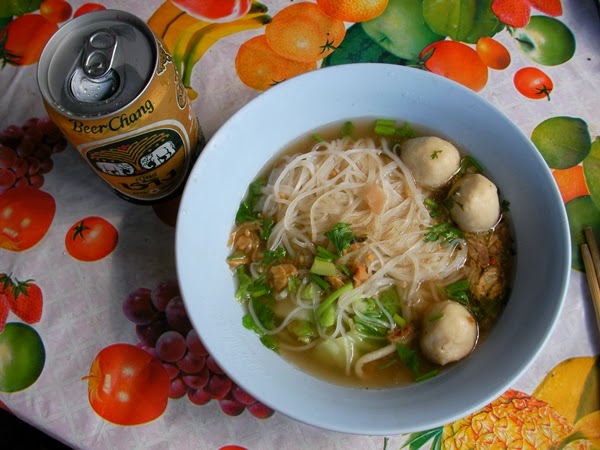
Soup with Beer in Can | MorgueFile
Photo by Mantasmagorical
Unless you’re willing to start a food blog and treat it as a business, unless you can find the time to update your site regularly, unless you are willing to learn how to improve your writing and food photography skills, and unless you’re comfortable with strangers coming in to your blog and sharing their good and not-so-good comments, then you cannot start a food blog. Because if that's the case, it is more likely that you motivation will evaporate.

Indeed, sustaining and keeping a food blog moving forward is tough. That’s why it is important that you have the right motivation and dedication in starting this kind of website. Because even if you started a blog “just for fun”, publishing your thoughts in a democratic medium rather than a secret journal would bring in a loyal reader or two. And in order to keep them coming, you have to give them the best food blog entry that you can offer.

Friday, January 10, 2014

So You Want to Start a Food Blog?

Food Blog for Starters is Lost in Flavors' online hub of information and insights about starting a food blog and beyond.

Before we begin, let me remind you that I’m not really a pro when it comes to blogging. In fact, I underwent a couple of struggles when I decided to start Lost in Flavors. Because of this, I thought of sharing the things I’ve learned and I will learn about food blogging through this series.


Sweet Crumble | MorgueFile
Photo by Max Straeten
How to Begin: Take Away the Greed

There are two things that you need to know when starting a food blog. First, you have to bear in mind that food blogging—or any type of blogging—is not a money-making machine. There are the perks like being invited to dine in a fine restaurant for free, alright, but that’s it. And no, food blogging doesn't give you the right to ask for freebies.

While you can make this your stepping stone towards a career you would like to have, such as writing a cook book or hosting your cooking show, food blogging must NOT replace your regular day job. After all, writing about food could be very expensive.

Mexican Restaurant | MorgueFile
Photo by Kevin Connors
If you’re like me who plans to visit the good and not-so-good restaurants around the Metro to test their menu, then you need to allot a budget for your food trip. On the other hand, you also need to shell out some cash for your ingredients if you intend to become the recipe maker type of blogger.

Unless you can find a steady stream of income that could help support your food blog and everything that comes with it, you shouldn’t quit your job. Moreover, you shouldn’t think that food blogging is the ultimate way to earn an income.

Why Do You Want to Blog?

Second thing you need to do is point out the purpose why you’re blogging. Sure, the ultimate reason why one starts a food blog is because of his or her love for food. But there are reasons people love eating or cooking.

Take Mhel and Ken Ignacio of Certified Foodies for instance. They started a food blog to share their food discoveries and dining experiences. It was also their way to challenge themselves and learn more about food and cooking.

My personal hero, Smarla Angtuaco, started Everyday Sweet Notes to document where she and her boyfriend spent their monthsaries. Perhaps it is her way of helping other couples out there to find the good places where they can spend their special moments.

Another favorite food blogger of mine is Brian Sioson of Flavors of Manila. Aside from making his blog into an alphabetized guide to Metro Manila dining, it also chronicles the diversity of cuisines the city has to offer.

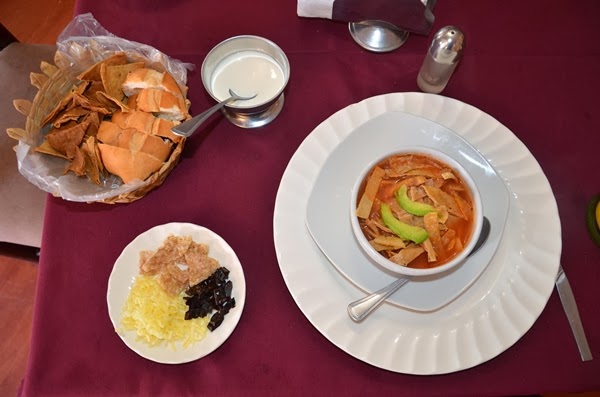
Tortilla Soup | MorgueFile
Photo by Kevin Connors
Knowing the purpose of your blog is simply answering the question: Why are you blogging?

As for me, I started Lost in Flavors because I would like to chronicle my gastronomic adventure, as well as inspire people to love food—be it through visiting one restaurant to another or through cooking. Why I've decided and learned to love food is another story. Additionally, I want to break some people's notion about fancy looking restaurants. I want them to learn through this blog that not every restaurant that looks classy or sosyal is expensive.


It is important to know your blog’s purpose because this will help you determine how you’re going to write and present your content. This will help you discern whether you’ll be writing a food review, restaurant review, recipe and cooking tips, share upcoming food events or a combination of them. Simply put, knowing your food blog’s purpose will aid you in planning how to start your site, generate content, optimize it, as well as monetize from your food blog.